
NDIR紅外氣體分析, 德國DIAS紅外探測器應用系列1
規格:NDIR紅外氣體分析, 德國DIAS紅外探測器應用系列1
單位:
瀏覽次數:1443
性能標簽:
NDIR紅外氣體分析, 德國DIAS紅外探測器應用系列1, 德國DIAS紅外公司的單元紅外探測器應用, 德國DIAS紅外公司的多元紅外探測器應用,
產品詳細描述
NDIR gas analysis NDIR氣體分析
許多氣體以一定特征吸收光譜吸收紅外輻射,這是由各自氣體的特定分子結構決定的。NDIR氣體分析是一種相對便宜的方法,可用于精確測定單種氣體的濃度,它利用待檢測氣體的單個物質典型吸收帶。
Many gases absorb infrared radiation in a characteristic absorption spectrum, which is determined by the specific molecular structure of the respective gas. Non-dispersive infrared gas analysis (NDIR gas analysis) is a comparatively inexpensive method for an exact determination of the concentration of individual gases, which utilizes individual substance-typical absorption bands of the gases to be detected.
Principle of gas concentration measurement using NDIR gas analysis NDIR氣體分析的氣體濃度測量原理

待分析的混合氣體位于寬帶紅外輻射器及紅外探測器之間定義好的體積之內。吸收紅外探測器的寬帶備有一個窄帶濾光片,其峰值傳輸正好位于待分析氣體的典型吸收帶。如果使用有多個光譜通道的紅外探測器代替單元
紅外探測器,則可以同時檢測多個離散氣體。紅外輻射器的發射光譜必須至少覆蓋所用吸收帶的光譜范圍。
如果在紅外輻射器及紅外探測器中沒有檢測到氣體,輻射出來的輻射能量幾乎可以毫無阻礙地擊中該紅外探測器,并在此生成最大可能的信號。隨著待測氣體的濃度增加,在其典型吸收光譜上的吸收會增加, 于是帶窄波段調諧的紅外探測器會輻射一個較低的信號。如果還有其它氣體通道的話,這些其它氣體通道也會相應地對其它氣體起作用。
The gas mixture to be analyzed is located in a defined volume between a broadband IR emitter and an infrared sensor. The broadband absorbing IR sensor is equipped with a narrowband filter which has its peak transmission exactly at a typical absorption band of the gas to be analyzed. If a sensor with multiple spectral channels is used instead of a single-element sensor, several discrete gases can be detected simultaneously. The emission spectrum of the emitter must cover at least the spectral range of the absorption bands used.
If there is no gas to be detected between the emitter and the sensor, the emitted radiation hits the sensor almost unhindered and generates the maximum possible signal there. With increasing concentration of a gas to be measured, the absorption on its typical absorption spectrum increases and thus the sensor with the narrowband filter tuned to it emits a lower signal. The other channels, if any, react accordingly only to other gases
| Gas氣體 | Absorption band吸收帶 |
| CH4 | 3.33 µm |
| HC | 3.40 µm |
| Reference基準氣體 | 3.91 µm |
| CO2 | 4.26 µm & 4.43 µm |
| CO | 4.64 µm |
| NO | 5.30 µm |
| NO2 | 6.22 µm |
| SO2 | 7.30 µm |
| Freon R134a 氟利昂 | 10.27 µm |
| Freon R12 氟利昂 | 11.30 µm |
對標準分析測量任務,紅外探測器類型PYROSENSLTA 系列及LTM系列特別適合。而采用德國DIAS紅外公司特別開發的PYROSENS LTMI系列及LTSI系列紅外探測器系列,NDIR氣體分析可以測量濃度很低的氣體,其濃度最低可到一位數的ppm。相應的檢測范圍取決于測量單元的結構以及待測的氣體。典型的光譜范圍約為1μm至20μm,但我們的紅外探測器甚至可以在遠高于100μm的波長上使用。
PYROSENS紅外探測器用于冰箱及空調系統的泄露檢測或泄露測試,以及高精度及溫度穩定的氣體濃度測試,這些氣體有CO、CO2及CH4,而CO及CO2間的交叉靈敏度比較低,常用于人類及獸醫。
此外,在半導體行業,PYROSENS還可以用于半導體行業的真空室清潔過程的終端監控的氣體監控。
For standard measurement tasks, the sensors of the type series PYROSENS LTA and LTM are perfectly suitable. With the type series PYROSENS LTMI and LTSI DIAS Infrared GmbH offers highly developed pyroelectric IR sensors which allow NDIR gas analysis even for lowest gas concentrations in the single digit ppm range. The respective detection limit depends on the construction of the measuring cell as well as on the gas to be detected. The typical spectral range is between approx. 1 µm and 20 µm, but our sensors can even be used at wavelengths far above 100 µm.
Für Standardmessaufgaben sind die Sensoren der Typenreihen PYROSENS LTA und LTM hervorragend geeignet. Mit den Typenreihen PYROSENS LTMI und LTSI bietet die DIAS Infrared GmbH hochentwickelte pyroelektrische IR-Sensoren an, mit denen NDIR-Gasanalyse auch für geringste Gaskonzentrationen im einstelligen ppm-Bereich möglich wird. Die jeweilige Nachweisgrenze ist dabei sowohl von der Konstruktion der Messzelle als auch vom zu detektierenden Gas abhängig. Der typische Spektralbereich liegt dabei zwischen ca. 1 µm und 20 µm, unsere Sensoren sind aber selbst bei Wellenlängen weit über 100 µm einsetzbar.
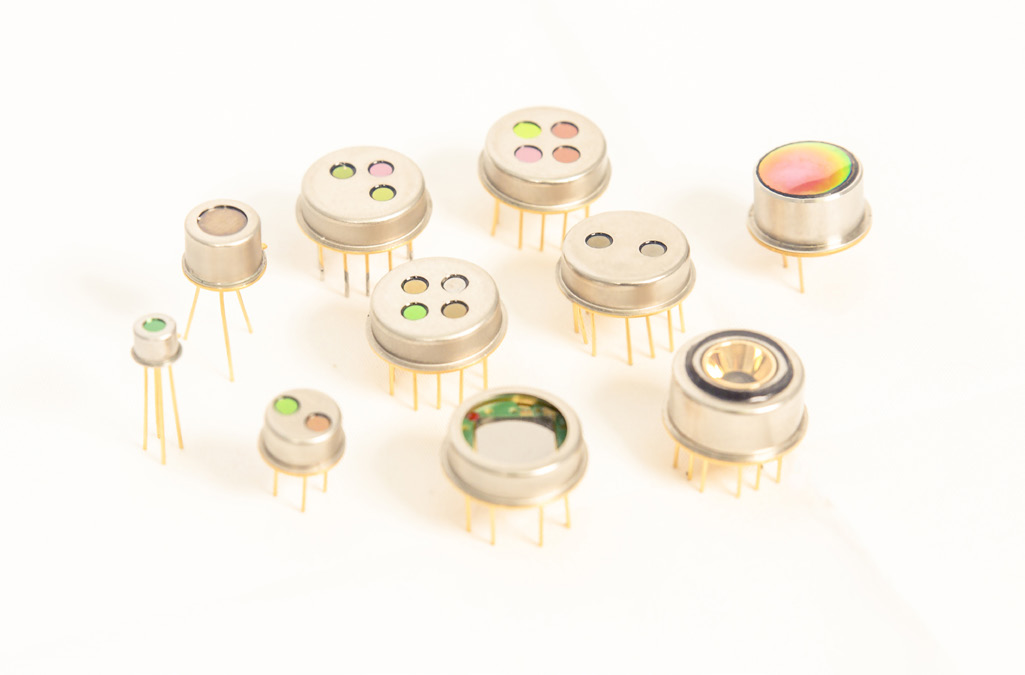
PYROSENS sensors are used for leak detection or leak testing of refrigerators and air conditioning systems as well as for highly accurate and temperature stable concentration measurements of gases such as CO, CO2 and CH4 with very low cross sensitivity between CO and CO2, which are used especially in human and veterinary medicine.
In the semiconductor industry, they are used, among other things, for gas monitoring in the end-point monitoring of vacuum chamber cleaning processes.
歡迎關注我們的微信公眾號KingDIAS
更多德國DIAS紅外產品及應用,
參見我們的微信公眾號KingDIAS,
或掃一掃二維碼:

本網站資料大多是準確的,最新產品資料以產品說明書和操作手冊為準。產品圖片可能與實際有差別,請以實物為準。